
Art can do more than inspire creativity in our homeschools. It can actively support your child’s executive function skills. Discover how creative learning builds focus, planning, flexibility, and confidence in your homeschool learning.
I still remember the morning everything clicked for me.

My son was sitting at the table, chalk pastel in hand, completely absorbed in what he was making. No reminders to stay focused or sighing. No asking how much longer. Just quiet, happy concentration.
I thought, “This is the child who couldn’t sit still for ten minutes of math this morning?”
Same child. A completely different experience. That got my attention.
What Are Executive Function Skills (and Why Do They Matter)?
It took me a while to put words to what I was seeing. But once I learned about executive function skills, the mental tools that help our kids plan, focus, manage their feelings, and follow through, so much started to make sense.
Executive function is basically your child’s inner manager. It handles things like:
- Getting started on tasks (especially hard ones)
- Staying focused long enough to finish
- Keeping steps in order and remembering what comes next
- Recovering when something goes wrong
- Managing big emotions before they take over
These skills develop at different rates in every child, and in our homeschools, we see all of it up close. The struggles and the growth, right there at the kitchen table with us.
Why Art Is Such a Powerful Support to Executive Function Skills
What I didn’t realize was that I already had one of the best tools for building these skills sitting in our supply cabinet and just one log-in away.
I used to think of art as a break from real learning, like a fun Friday activity or something to do when the week had been hard. I didn’t realize it had the capacity to be so much more.
Art naturally engages the brain in ways that traditional worksheets often don’t.
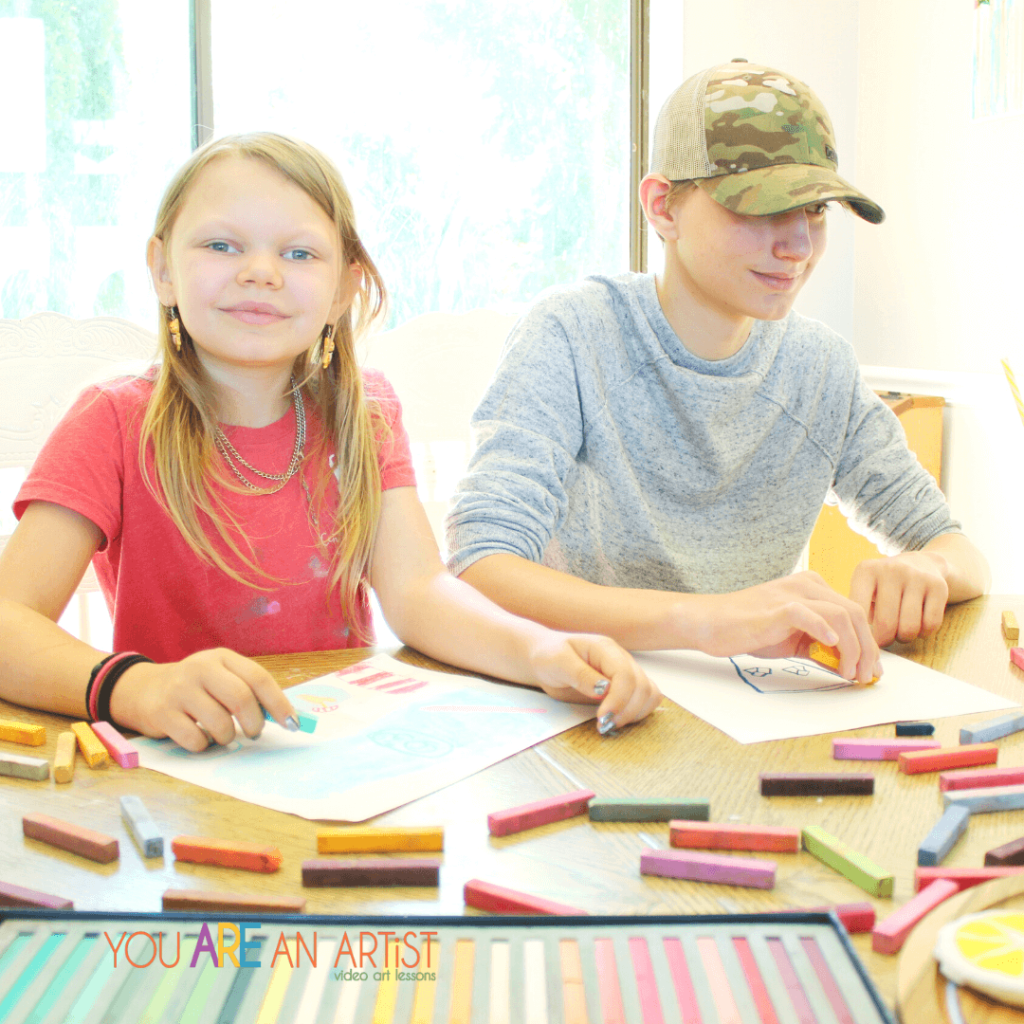
Instead of pressure and performance, art invites:
- Curiosity
- Exploration
- Process over perfection
And because of that, it becomes a gentle and incredibly effective training ground for executive functioning.
6 Ways Art Builds Executive Function Skills
1. Planning and Organization
Even simple art projects require a plan:
- What colors will I use?
- Where do I start?
- What comes next?
Over time, children begin to internalize these steps. They learn how to think ahead and organize their approach. These are skills that transfer into writing, math, and beyond.
2. Task Initiation (Getting Started)
For many kids working on strengthening executive function skills, starting is the hardest part.
Art however, lowers the barrier. There’s no “wrong” first step. There’s no blank page pressure in the same way. Just an invitation to begin.
And beginning, again and again, builds confidence.
3. Sustained Attention
When a child is engaged in an art lesson they enjoy, they tend to stay with it longer. They focus more deeply and they enter that quiet, absorbed state we all love to see.
This kind of attention strengthens over time, and it carries into other learning areas.
4. Working Memory
Art often asks children to follow steps while still holding an idea in their mind while creating.
The sequencing matters and practicing it strengthens working memory (an important component of executive function) in a meaningful, hands-on way.
5. Flexibility and Problem-Solving
Mistakes happen in art all the time. A line goes the wrong way or a color doesn’t look quite right.
And instead of giving up, art helps our children learn to adapt:
- “What can I do with this?”
- “How can I change it?”
That’s cognitive flexibility, and it’s a critical life skill.
6. Emotional Regulation
This one might be the most powerful of all.
Art provides a safe outlet for expression. It slows the pace and creates space to process feelings. For children who feel overwhelmed, frustrated, or stuck, art can bring a sense of calm and control.
And when emotions are regulated, learning becomes possible again.
What This Looks Like in Real Life
Here’s the best part:
You don’t need complicated plans or hours of prep. A simple art lesson once or twice a week can:
- Create rhythm in your homeschool
- Give your child something to look forward to
- Build these critical skills over time
Even better, you’ll start to notice changes beyond art, changes that impact learning across academic subjects.
A Simple Place to Start
We believe art is essential for every child and every homeschool.
Our lessons are designed to be:
- Easy to follow
- Encouraging (not overwhelming)
- Flexible for multiple ages
So your child can build skills and confidence, at the same time, all while having fun.
Art Activities for Every Month of the Year
Look ahead to ALL the art activities for homeschooling you can enjoy every month of the year:
- January Homeschool Art Activities
- February Homeschool Art Activities You Will Love!
- March Homeschool Art Activities
- Awesome April Homeschool Art Activities
- Marvelous May Homeschool Art Activities
- June Homeschool Art Activities Perfect for Summer Fun
- July Homeschool Art Activities
- Wonderful Learning with August Art Activities for Your Homeschool
- September Adventure Homeschool Art Activities
- October Science and Art Activities for Homeschool Learning and Fun
- November Learning Activities for Your Homeschool: art, history, geography and more!
- December Art Activities Perfect for Holiday Homeschooling
How about an online summer art camp chocked full of artful activities? Enjoy it from the comfort of your own home! An Online Summer Art Camp Perfect for All Ages
Homeschool Art Lessons for the Whole Family with You ARE an ARTiST Complete Clubhouse
Build beautiful memories while having fun painting today around the kitchen table.

Shawna Wingert is a special education teacher turned writer, speaker and consultant. She is also a homeschooling mom of two brilliant boys with differences and special needs. Shawna has written four books for parents – Everyday Autism, Special Education at Home, Parenting Chaos and her latest, Homeschooling Your Child With Special Needs. She helps parents of children with learning differences, behavioral challenges and special needs every day at DifferentByDesignLearning.com.